


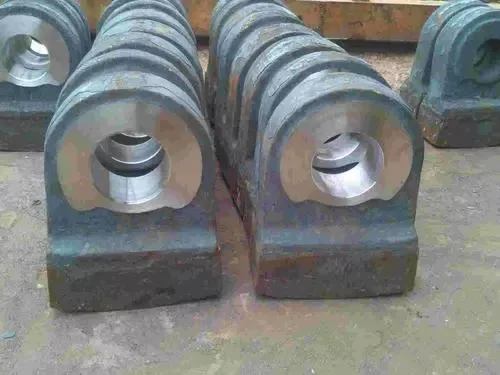
The bimetallic composite hammer head utilizes the high-speed impact of the plate hammer and the rebound effect of the counterattack plate, causing the material to be repeatedly impacted and broken. The plate hammer is fixed on the high-speed tampered rotor and several counterattack plates are placed along the crushing chamber at different angles. The material enters the sensing area of the plate hammer and is initially shattered by the first attack of the plate hammer, while also gaining kinetic energy and rushing towards the counterattack plate at high speed. After colliding with the rebound plate, the material is shattered again and bounced back to the impact zone of the plate hammer, where it is again impacted by the plate hammer. Repeat several times until it is crushed into the required particle size and pushed out of the machine.
The bimetallic composite hammer head is cast from high chromium cast iron, and its main advantage is that under high pressure and impact forces, the surface of the component will harden, which gives the component good wear resistance and is therefore widely used in the market. In recent years, the cement and power industries have developed rapidly. The crushing of block stones, especially those with high silicon content, results in a short lifespan of the hammer head and high usage costs. After repeated testing and trial use, our company has effectively solved the density of the dual alloy composite metal structure and the hardness of the composite wear-resistant layer. The centrifugal pressure composite casting of the two alloys has fully met the required adhesive force. The hammer head is made of ultra-high hardness alloy material, which has high wear resistance, high impact toughness, longer service life of the hammer head, and stronger crack resistance of the hammer handle